On the Collapse of the Social Contract and What Relationship Science Tells Us About Why
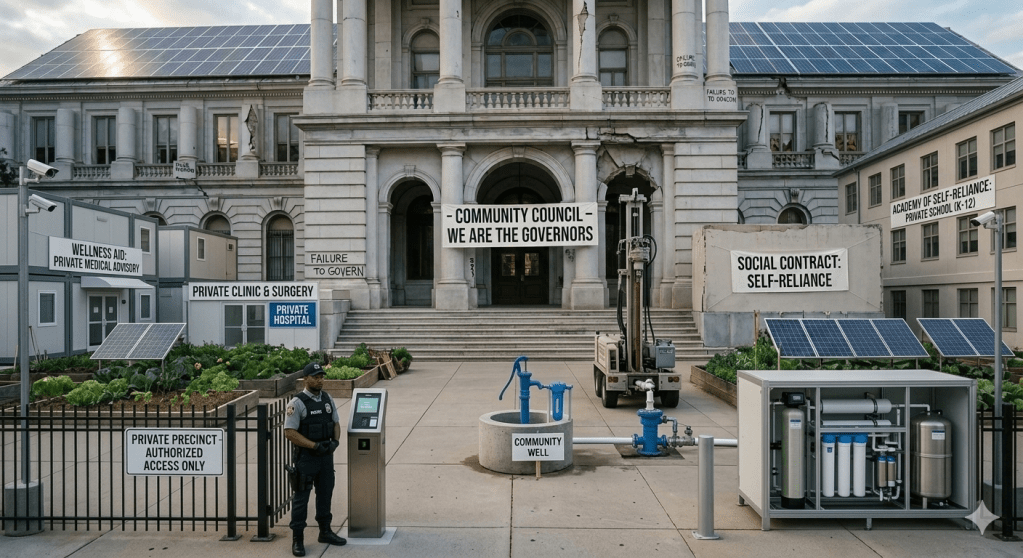
I have travelled across close to fifty African countries. My friend and brother, Dr. Thebe Ikalafeng, has visited all fifty-four or fifty-five. When you travel that widely, patterns emerge that no single newspaper and no single policy paper can capture. You begin to see things not as isolated national failures, but as a continental condition.
Chinua Achebe diagnosed it in 1983. His slim, unsparing book about Nigeria, which he conceded could just as easily have been titled The Trouble with Africa, remains one of the most accurate political documents ever written on this continent. His central finding: the trouble with Nigeria is simply and squarely a failure of leadership.
“The trouble with Nigeria is simply and squarely a failure of leadership.”
Chinua Achebe, 1983
Everything else, systemic corruption, tribalism, nepotism, the cargo cult mentality of elites who expect prosperity to arrive without toil, and a culture of indiscipline modelled from the top, Achebe named as symptoms of that one core absence. Four decades later, substitute any African capital for Lagos and the diagnosis still holds.
What You Notice When You Travel the Continent
When you move through East, West, and North Africa, one observation strikes you almost immediately: in most countries, citizens are not waiting for government anymore. They have stopped waiting. They have built their own infrastructure.
Generators running through load-shedding that lasts not hours but days. Solar panels on rooftops in cities with functioning power grids, installed not for sustainability, but for survival. Private boreholes sunk beside crumbling municipal water pipes. Water purifiers on kitchen counters. Security estates with private guards because the police have not arrived in years. Citizens doing, in private, what governments promised to do in public.
South Africans were slow to reach this point. We are not a motorbike culture. We do not typically employ personal drivers. But things are shifting. Solar installations are booming. Boreholes are being sunk. And communities in municipalities long abandoned by their councils have started fixing potholes themselves, without consent, without tender, without ceremony.
A Structural Observation
The citizens of many East, West, and North African countries cannot wait to leave for the USA, Canada, or the UK, or to win a green card. Meanwhile, most of South Africa’s Uber and delivery motorbike riders are not South Africans, they are citizens of those very countries, who left because their governments stopped being their governments. This is not irony. It is data.
In South Africa we are slowly becoming our own government. And when that happens, when citizens become Home Affairs, when they become immigration officers, border patrol, law enforcement, judge and jury, do not be surprised when “Abahambe” becomes the norm. Do not be surprised when the social fabric tears.
The Relationship Framework: Why This Is a Science, Not Just a Metaphor
The relationship between a government and its citizens is not a metaphor. It is a relationship, with all the psychological architecture that implies. It is a bond premised on perceived mutual commitment. And like all bonds, when that perception collapses, the relationship dissolves, often violently.
In relationship science, perceived partner commitment is defined as an individual’s subjective belief about the extent to which their partner desires, intends, and is motivated to maintain the relationship into the foreseeable future. The operative words are: subjective belief, safe, certain, foreseeable future, attachment, and dedication.
Here is what makes this framework so powerful: the threshold is not objective reality. A government does not need to achieve electricity stability or pothole-free roads to maintain citizen loyalty. It only needs citizens to feel, to perceive, that it is trying, that it cares, that it is committed to a shared future. Perception, not performance, is the primary currency.
What you believe your government feels about the future is often more influential than what it actually does.
Decades of psychological research confirm this in romantic partnerships: perceived commitment is the foundational bedrock of lasting relationships because it dictates how individuals interpret their partner’s actions and forecast the relationship’s longevity. The same principle applies, with equal force to the civic bond.
Why Perceived Commitment Is Non-Negotiable
1. It Builds Daily Trust and Security
Believing that a partner or a government, wants the relationship to persist creates a powerful psychological buffer. It reduces hypervigilance. It de-escalates anxiety and fear. Daily diary studies published in The Journal of Social Psychology show that on days when people perceive high commitment from their partner, relationship satisfaction spikes, even when objective conditions have not changed.
In civic terms: when citizens perceive that their government is genuinely invested in their future, they extend goodwill even during difficult times. They interpret policy failures as temporary setbacks, not evidence of permanent abandonment. That buffer is extraordinarily valuable and extraordinarily fragile.
2. It Drives Pro-Relationship Behaviour
Commitment motivates sacrifice. In romantic partnerships, people are willing to alter their lifestyles, share financial burdens, and relocate only when they perceive their partner is equally locked in. In the civic relationship, this translates directly: citizens pay taxes, obey laws, and participate in democracy only when they believe the government is equally invested in the collective future.
When that perception fades, the first casualty is compliance. The shadow economy grows. Tax avoidance becomes normalised. Civic participation collapses. Not because citizens are selfish, but because they are rational actors who have concluded that the partnership is over.
3. It Prevents Fluctuation Burnout
Longitudinal research proves that it is not only low commitment that destroys relationships, it is unstable perceptions of commitment. Partners who experience wild fluctuations in how committed they feel their partner is suffer severe psychological doubt. This instability forces constant re-evaluation of the relationship’s safety, which ultimately triggers emotional detachment.
South Africa’s citizens have lived through exactly this cycle. Moments of genuine institutional hope, the Truth and Reconciliation Commission, the early Mandela years, occasional prosecutorial action, have been followed by long seasons of perceived abandonment. The oscillation is more damaging than consistent low commitment. It exhausts the capacity for trust.
The Personality Twist: When Stability Enables Impunity
Behavioural scientists have identified a critical caveat: high perceived commitment does not uniformly produce good behaviour. The response depends on personality.
If Your Partner Is…
High Perceived Commitment Signals. Resulting Behaviour
– Highly Agreeable (Empathetic, Cooperative)
– More Selfless Behaviour. They double down on care and relationship maintenance.
Low Perceived Commitment Signals. Resulting Behaviour
– Low in Agreeableness (Antagonistic, Self-centred)
– More Selfish Behaviour. They take the relationship for granted and act out, knowing there are no consequences.
Applied to governance: highly agreeable, civic-minded citizens respond to perceived government commitment with deeper civic investment. But governments or governing elites, who score low in agreeableness, who are antagonistic and self-centred, respond to high citizen commitment (i.e., strong civic loyalty and low likelihood of revolt) with greater impunity. They take the relationship for granted precisely because they believe citizens will not leave.
This is not a peripheral finding. It is the structural explanation for why stable democracies with high civic trust can still produce corrupt, self-serving elites: the governing class reads citizen commitment as a signal that there are no consequences. Stability becomes a licence.
How Perceived Commitment Breaks Down Between Governments and Citizens
The breakdown follows predictable structural and psychological mechanisms. It is not random. It is not cultural. It is relational science playing out at national scale.
Structural Failures
When a government cuts public spending, fails to maintain infrastructure, or allows public services to deteriorate, citizens perceive that the state is no longer invested in their well-being. High taxation combined with poor public returns, or perceived corporate bailouts, signals asymmetric commitment: the government is committed to elites, not to the people. This is precisely what Achebe called the cargo cult mentality: elites extracting prosperity without generating it.
Institutional Betrayal
Systemic corruption sends an explicit signal that the ruling class has zero personal commitment to the collective good. Broken campaign promises destroy reliability. When accountability vanishes, the perception of a shared future dissolves. The result is not simply anger, it is the specific psychological experience of betrayal by someone you trusted with your future.
The Attraction of Alternatives
When satisfaction plummets, the quality of alternatives becomes highly attractive. Citizens who believe the government is corrupt stop paying taxes and move into the informal economy. Populist and extremist movements gain traction not because voters are irrational, but because they offer a new relationship model to a population that feels completely abandoned by the established one. This is Abahambe at the ballot box.
Authoritarian Overreach as a Substitute
When dedication fades, governments often resort to structural constraint, heavy policing, censorship, legal threats, to force compliance. This backfires. It confirms citizens’ suspicion that the state has replaced commitment with control. Demanding patriotism without reciprocating with service produces civic alienation, voter apathy, and ultimately, civil unrest.
What Governments Must Do to Rebuild Perceived Commitment
The behavioural science is unambiguous on what high perceived commitment requires. It is not eloquent speeches. It is not strategic communication. It is a signal, consistent, visible, verifiable signal that the government is invested in a shared future.
Tangible Delivery. Consistent delivery of tangible public goods, safe roads, stable utilities, universal healthcare, quality public education. Citizens judge commitment by what they see and experience daily. Visible returns on tax payments are the most powerful signal available.
Radical Transparency. Radical institutional transparency, open budgeting, independent anti-corruption oversight with real prosecutorial teeth, accessible public information. Secrecy destroys trust. Openness signals that the government has nothing to hide from its citizens.
Procedural Fairness. Procedural fairness and consistent rule of law,. equal justice for elites and ordinary citizens, protected civil liberties, merit-based public appointments. Perceived commitment relies on predictability and the belief that the system is not rigged.
Citizen Co-Creation. Direct citizen co-creation, participatory budgeting, live feedback loops on service delivery, meaningful consultation in policymaking. Commitment is a two-way street. Citizens must feel that their voices actually shape the shared future.
None of these require a surplus budget. Several require nothing more than political will and institutional integrity,. which is precisely why they remain so rare.
The Closing Argument
Achebe published The Trouble with Nigeria in 1983. The book is now, in effect, titled The Trouble with South Africa. The symptoms he named, failure of leadership, systemic corruption, tribalism, nepotism, cargo cult mentality, indiscipline, have migrated south and found a comfortable home.
But the framework that explains why citizens become their own government is not political science. It is relationship science. Citizens do not abandon governments out of laziness or ingratitude. They abandon governments the way people leave relationships, slowly, then suddenly, after the perceived commitment has been withdrawn one broken promise at a time.
Citizens do not abandon governments out of laziness. They abandon them the way people leave relationships, slowly, then suddenly, after the perceived commitment has been withdrawn one broken promise at a time.
When citizens install solar panels and sink boreholes and fix potholes without consent, they are not being heroic. They are grieving. They are doing the work of a partner who has stopped showing up, managing the household alone, and quietly updating their expectations downward.
Ubuntu says: Umuntu ngumuntu ngabantu, a person is a person through other persons. The government is a person in this equation too. Its personhood, its commitment to the collective, is what makes citizenship meaningful. Without that, what remains is not a republic. It is a collection of individuals, each building their own country, alone.
That is the trouble with us.
================
Dr. Mzamo Masito
Behavioural & Business Scientist | Author | Social Entrepreneur.
Between Thoughts – Intellectual Musings
Where the uncomfortable questions get a seat at the table..
 Between Thoughts -Intellectual Musings
Leave a comment