What the Trending Comments Actually Tell Us About Ourselves
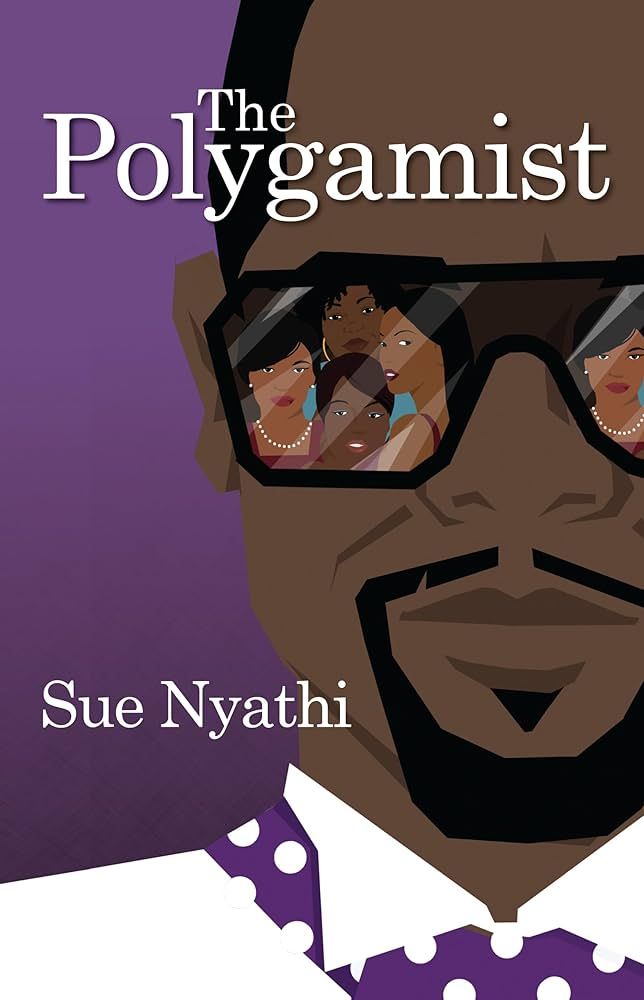
This week, Sue Nyathi’s debut novel The Polygamist, first published in 2012 and now adapted into a Netflix series, trended across South Africa. And with it came a flood of comments, each one revealing more about the commenter than about Jonasi Gomora.
I am not a film critic. I am not a book critic. But having written and published a book myself, I have enormous admiration for anyone who writes and sees it through to the end. Well done, Sue Nyathi. The 2012 book. Now the Netflix series. The adaptation. All of it, extraordinary. Kudos.
What I am is a social and behavioural scientist. And the trending comments are a dataset.
The comments did not reveal what people think about polygamy. They revealed what people think about themselves.
Three statements dominated the conversation. I want to examine each through the lens of empirical relationship science and behavioural psychology. I will leave the patriarchy debate for another day, I have spoken and written about it at length, and I have little to add today.
The three statements:
“Not me. I will never. I must be high on something cheap or it’s witchcraft.”
“Amadoda, yho!” Ayasithanda isithembu- men love or dream of isithembu.
“There is a line I will not cross.”
01. “Not Me. I Will Never.”
Let us begin with the most confident of all human declarations: the pre-emptive moral statement. I will never. I am not that person. Not me.
We do not know ourselves enough. We are all faithful to our virtues only because we have not been presented with a good enough opportunity, the one we cannot resist. The one that exposes all our “I am not enough.” Everyone says “I will never date XYZ.” Then jiki jiki, the universe, which is always testing our easily spoken virtues and rarely practised ones, presents us with exactly that test. And the majority of us forget we ever said “I will never.”
Virtue is cheap when it has not been tested by cost or chemistry.
Human beings are notoriously inaccurate at predicting their own romantic boundaries when faced with real-world temptation. Empirical research strongly supports this. The phrase “I will never” dissolves rapidly when abstract principles encounter visceral, real-time context.
Stated Preference vs. Revealed Preference
The Speed-Dating Studies (Finkel & Eastwick)
Psychologists Eli Finkel and Paul Eastwick tracked individuals who had explicitly listed their “absolute deal-breakers” and “must-have” virtues in a partner. When placed into actual speed-dating scenarios, their real-time attraction completely ignored their stated rules. Someone who swore they would “never date a smoker” or “never date someone without a degree” routinely exchanged contact information with exactly those people , the moment the face-to-face chemistry was high enough.
THE TAKEAWAY
When a restriction is abstract, our brains use logical, high-minded rules. When a flesh-and-blood human is standing in front of us, emotional, chemical, and visceral systems override those spoken rules entirely.
The Hot-Cold Empathy Gap
Coined by behavioural economist George Loewenstein, the Hot-Cold Empathy Gap explains precisely why we miscalculate what we will tolerate.
The Principle
When we are in a “cold” psychological state, rational, calm, unaroused, we completely fail to predict how we will behave in a “hot” state: lonely, deeply attracted, emotionally desperate, or chemically intoxicated by another person.
The Relationship Application
The person sitting at home calmly thinking “I will never stay with someone who treats me like a secret” is in a cold state. That same person, deeply attached, terrified of abandonment, and intoxicated by someone charismatic, is in a hot state. The cognitive architecture changes entirely. The “opportunity we cannot resist” alters brain chemistry, and we quickly rationalise the exact behaviours we once condemned.
The Ideal Standards Model (Simpson & Campbell)
Psychologists Jeffry Simpson and Lorne Campbell studied how flexible human beings are with their relationship rules. Their empirical data reveals something uncomfortable: we possess extraordinary cognitive flexibility when it comes to protecting a current attachment.
If a partner crosses a pre-determined boundary, the brain does not usually prompt departure. Instead, it retroactively rewrites the rules. I call this the Jiki Jiki Effect. You swear you will never date someone who is financially unstable and then you meet someone who sweeps you off your feet. Suddenly, “passion and creativity” are what you have always truly valued. The virtue warps to fit the temptation.
Affective Forecasting Errors (Gilbert & Wilson)
Daniel Gilbert and Timothy Wilson’s research on affective forecasting, our ability to predict future emotional reactions, confirms the pattern. We are universally poor at this. We overestimate our rigidity. We assume a boundary violation will feel so intensely wrong that we will walk away immediately. But humans possess what Gilbert and Wilson call a “psychological immune system”, a protective rationalisation mechanism that activates the moment we do the thing we swore we would never do: “The situation is nuanced.” “They are going through a hard time.” “Our love is different.”
THE EMPIRICAL CONSENSUS
The “I will nevers” are not concrete shields. Science shows they are smoke screens that evaporate the second our emotional, attachment, and chemical systems are activated by the right person at a vulnerable time.
02. “Amadoda — Yho!”
The exclamation was directed at men. At their desire. At the apparent impossibility or inevitability, of polygamous impulse. So let us examine what the data actually says.
In South Africa, approximately 1.6% of married individuals and well under 1% of the total male population, practice polygamy. National data registers roughly 30,000 men in legally recognised polygamous unions out of a male population of approximately 30 million. This is a microscopic fraction. The practice is also deeply regional. A national health profile study found polygamous marriages highly concentrated in traditional strongholds: Limpopo, where 51.1% of a sampled subset of traditional marriages were polygamous, and KwaZulu-Natal at 13.8%, driven by Zulu traditionalist culture.
“But most men secretly want polygamy”, this is a hypothesis, not a fact. And we are entitled to our feelings, but not to our own facts.
There are no comprehensive, quantitative “desire surveys” tracking what percentage of South African men actually want polygamy. What sociological and attitudinal data does exist reveals a stark generational and urban-rural divide:
Among older, rural, traditionalist men, particularly in KwaZulu-Natal and Limpopo, ethnographic studies suggest a sustained preference for polygamous structures, with desire remaining culturally high where resources would theoretically allow it.
Among younger, urban men, the picture reverses sharply. Even men who could theoretically afford multiple households cite the immense emotional stress of managing family disputes, the financial reality, and a decisive shift toward Westernised companionate marriage, built on exclusivity, intimacy, and parity.
The “Amadoda — yho” is not a universal male psychology. It is a specific cultural, generational, and economic configuration. Collapsing all men into a single desire is as imprecise as any other generalisation. The science asks us to be more careful with our pronouncements.
03. “There Is a Line I Will Not Cross”
The third statement is the most philosophically interesting. Because it raises the only question that matters: where is the line? Who drew it? And do you even know when you have crossed it?
When people desperately desire what they have never had, the mansion, the security, the affirmation, the love, the survival, those lines cease to exist. They are not removed. They are not broken. They simply stop being visible.
The Clinical Parallel: Anosognosia and Insight
My mother worked at Valkenberg Hospital, a tertiary psychiatric institution in Observatory, Cape Town, providing highly specialised services to adults with severe mental illness. There was a saying among some staff: “If you know you are mentally ill, you are not. People who are truly ill do not know it.”
This popular belief contains a grain of truth. Anosognosia, from the Greek meaning “to not know a disease”, is a real, documented neurological condition caused by structural differences in the brain’s frontal lobe, which governs self-awareness. It is not denial. It is a hardware deficit. Clinical data confirms it affects 50–98% of people with schizophrenia, 40–50% of people with bipolar disorder during acute manic episodes, and over 80% of Alzheimer’s patients. For these individuals, their brain physically lacks the capacity to process that its perceptions are flawed.
But this is only a partial truth. For the vast majority of mental health conditions, major depression, anxiety disorders, OCD, panic disorder, hundreds of clinical studies show that people are acutely, painfully aware that something is wrong. Awareness is measured in psychiatry on a sliding scale called clinical insight. A person experiencing a psychotic break can have no insight on Monday, believing a delusion completely, and partial insight by Friday.
WHY THIS MATTERS FOR THE LINE
The four women in The Polygamist did not know they had crossed their own lines while it was happening. The breakdown of personal boundaries under the weight of sick love, severe deprivation, ambition, and attachment trauma does not announce itself. It accumulates silently.
When you are in the middle of the chase, the dopamine, the cortisol, the adrenaline flooding the system, you cannot see the line. You only search for it after the car has sped away, the adrenaline fades, and you are left sitting on the pavement looking at your bleeding legs.
The line is not drawn by society. It is not drawn by the person driving the car. The line is drawn by your own self-respect.
The ultimate test: you know you have crossed the line the exact moment your actions require you to minimise your own reality, or trade your physical or emotional safety, simply to keep something external.
And by that point, most of us have long since stopped looking for the line at all.
Closing Reflection
Sue Nyathi did not write a cautionary tale about four women and one man. She wrote a behavioural science case study in fiction. The four women of The Polygamist are not anomalies. They are archetypes, each representing a different configuration of stated virtue colliding with real-world temptation, of lines drawn in the cold dissolving in the heat.
The trending comments told us this much: we are all confident about who we are until we are not. We are all certain about what we would never do until the right person, at the right vulnerability, in the right moment, makes us forget we ever said anything at all.
The science is not here to judge. It is here to make us a little more honest, with ourselves, first.
============
Dr. Mzamo Masito
Between Thoughts – Intellectual Musings
Where the uncomfortable questions get a seat at the table.
 Between Thoughts -Intellectual Musings
Leave a comment